Imagine the government telling your favorite TV channel — comply with us, or lose your right to broadcast. That’s not a dystopian movie plot. That’s what’s happening to Disney and ABC right now. And the sociology of it is even more alarming than the headlines of disney vs FCC controversy. While this media censorship battle unfolds at the federal level, it heavily reflects the broader algorithmic explosion and narrative shifts we recently broke down during the California primary and LA Mayor race.
What Is the Disney vs FCC Dispute — And Why Is It Trending?
Disney’s ABC complied with the Federal Communications Commission’s order to file for early license renewals for its eight local broadcast stations — but pushed back hard, calling the FCC’s demands unconstitutional and describing the order as “an effort to suppress speech under the guise of bureaucratic process.” Here’s the timeline that got us here:
- Late 2024: Disney settled a Trump defamation lawsuit for $15 million — legal experts said Disney could have won
- March 2025: FCC opened investigation into Disney’s DEI programs
- 2026: FCC initiated proceedings against ABC over The View — claiming it violated equal time rules for political candidates
- May 2026: FCC ordered Disney to file early license renewals for all eight ABC stations — coming just one day after Trump publicly demanded ABC fire Jimmy Kimmel
One day after Trump demanded Kimmel’s firing. One day. That timing is not a coincidence. And everybody knows it.
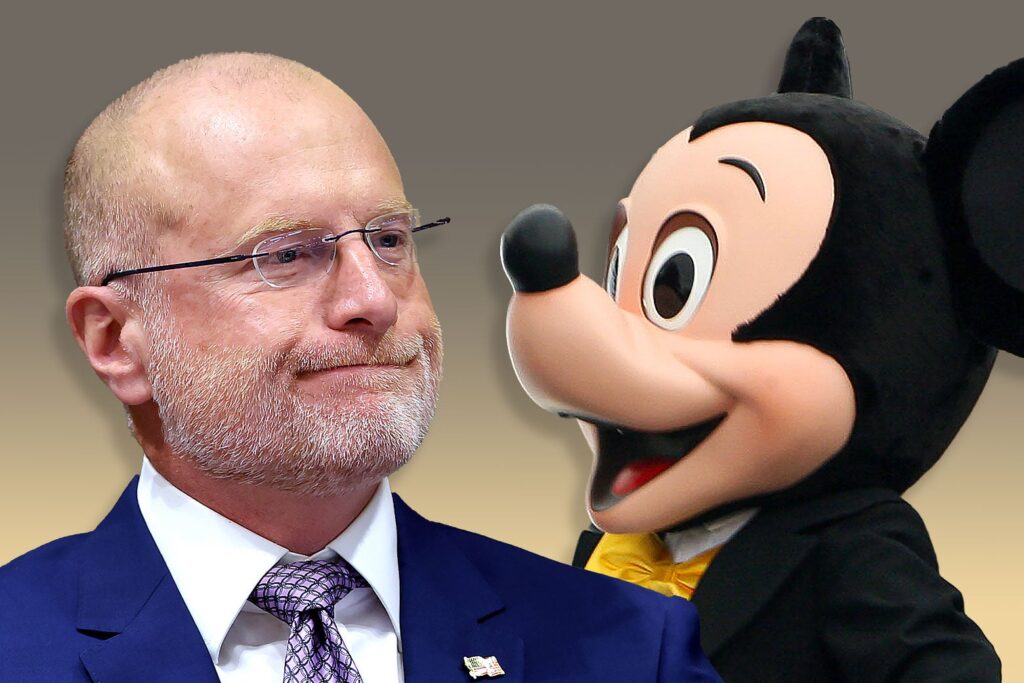
Is the FCC Threatening Disney’s Broadcast License?
Yes — and it’s serious.Requesting early license renewals is highly unusual and widely seen as a sign that the agency is preparing to challenge an owner’s fitness to hold a broadcast license. Disney’s licenses were not set to expire for another two to five years. FCC Commissioner Anna Gomez wrote publicly: “What Disney and ABC are facing is not a series of coincidental regulatory actions but a sustained, coordinated campaign of censorship and control, carried out through the weaponization of the FCC’s authority as a federal regulator.” A sitting FCC commissioner calling her own agency’s actions a “campaign of censorship.” That’s extraordinary. And it should alarm every American — regardless of political affiliation.
The Sociology of Media Control — What Michel Foucault Would Say
Sociologist Michel Foucault wrote about disciplinary power — the idea that the most effective control isn’t direct punishment but the threat of punishment. You don’t need to actually revoke Disney’s license. You just need Disney to believe you might — and watch them self-censor. Legal experts and media analysts have pointed out that Disney’s early capitulation — settling the Stephanopoulos lawsuit when it likely could have won — “opened the door to all of these future actions against the media.
What they learned is that capitulation doesn’t buy you protection; it might buy you some time, but they will keep coming back for more.” This is Foucault’s Panopticon in real time — you don’t need to punish everyone. You just need to make an example of one, and the rest police themselves. CBS already folded. Disney is fighting back.
What Is ABC Saying About the FCC Demands?
Disney is not staying quiet this time.ABC argued that The View has operated under a news program exemption from equal time rules for over 20 years — and that the FCC’s new interpretation threatens editorial judgment protected under the First Amendment. Even Republican Senator Ted Cruz warned that the agency is going too far against speech it doesn’t like. (Wikipedia) When Ted Cruz and Democratic senators are both saying the FCC has gone too far — something genuinely alarming is happening. Legal analysts believe that if this goes to court, the FCC will lose. Disney has lawyered up and is choosing to fight — unlike CBS, which capitulated earlier.
Why This Matters Beyond Disney
Noam Chomsky and Edward Herman wrote about Manufacturing Consent — how media freedom is always constrained by the political and economic interests of those in power. The Disney vs FCC battle is a live demonstration of that thesis. When a government can threaten a broadcaster’s license because it doesn’t like the political content of a daytime talk show — the line between state power and free press has been crossed. This isn’t about Disney being a victim. Disney is a $200 billion corporation that can afford the best lawyers in America. This is about what happens to smaller broadcasters — local news stations, community radio — who can’t afford to fight back. They’ll fold quietly. And nobody will notice.
The Takeaway
The Disney vs FCC fight is about more than one company and one regulator.It’s about whether the government can use regulatory power as a weapon against media it dislikes. It’s about whether the threat of losing a broadcast license is enough to make journalists self-censor. It’s about whether capitulation buys safety — or just invites more pressure.As one legal expert put it: “What they demand is absolute allegiance to this administration and nothing else.” Disney is fighting. The question is whether anyone else will join them.Because the Panopticon only works if everyone stays silent.
Frequently Asked Questions
³