Every June 1, something predictable happens. Your favorite brands swap their logos to rainbow versions. Limited edition Pride merchandise floods the shelves. Corporate emails arrive in your inbox celebrating “inclusion and belonging. “And then, every July 1, it disappears. The rainbow logos go back to normal. The merchandise clears out. The emails stop. LGBTQ+ people are still here. The corporations have moved on. This is Pride Month in 2026. And this year, something has shifted — in a way that reveals everything about what corporate allyship was always really about.
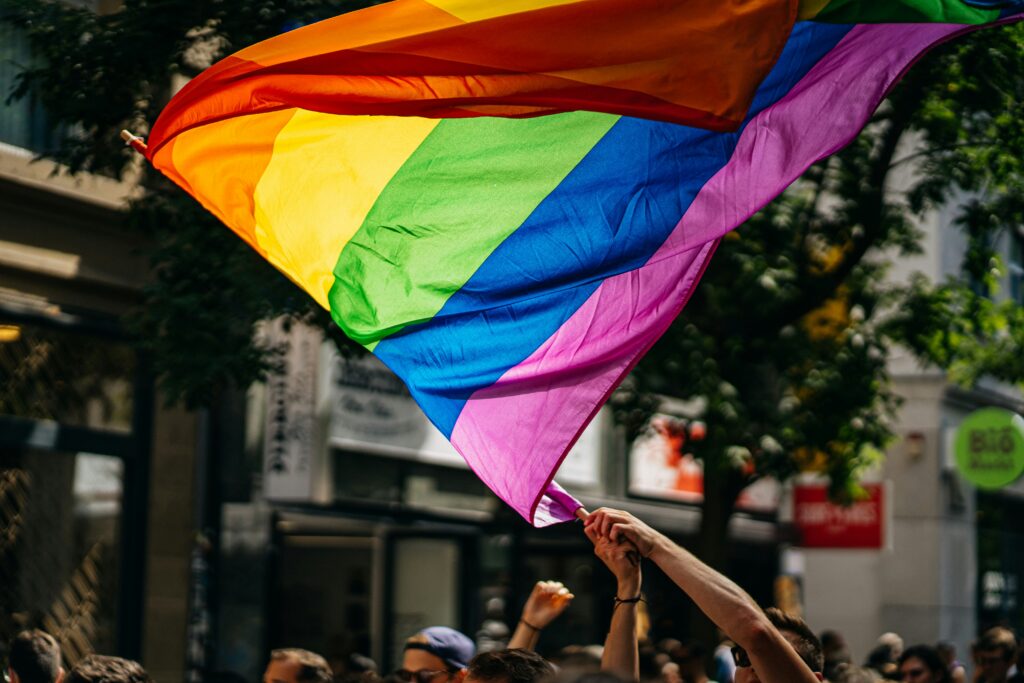
What Is Pride Month and Why Is It Celebrated in June?
Pride Month is celebrated every June to honor the Stonewall Uprising of June 1969 — when LGBTQ+ people in New York fought back against police raids at the Stonewall Inn. It wasn’t a marketing campaign. It was a riot. The people who threw the first bricks at Stonewall were predominantly Black and brown transgender women and drag queens — the most marginalized members of an already marginalized community. They were fighting for their lives, not their brand visibility.
Decades later, that rebellion became the foundation of a global movement — and eventually, a $3.9 billion annual consumer spending event.The corporations noticed.
What Is Rainbow Washing — And Why Are Brands Going Quiet in 2026?
Rainbow washing is the practice of using rainbow-themed symbolism in branding, advertising, merchandise, or social media — ostensibly in solidarity with LGBTQ+ people during Pride Month — without active support of LGBTQ+ people’s identities or rights year-round. For years, it was everywhere. Rainbow logos. Pride collections. Corporate floats in parades. This year? The silence is loud. (Pride month 2026)
Popular brands like Target, Nike, and North Face chose not to release or scale back Pride merchandise this year. Several large corporations stopped changing their logos to rainbow alternatives and made no public acknowledgment of Pride at all. And here’s the uncomfortable truth that LGBTQ+ people are sitting with: This pullback shows yet again that corporations seem to only care about the queer community as far as it benefits their profits — and the sentiment that it is no longer profitable to support queer people in the US has grown too large to ignore. The rainbow was never really about love. It was about money.
Why Do Companies Participate in Pride Month — The Sociology Nobody’s Saying
Sociologist Erving Goffman introduced the concept of impression management — the idea that individuals and institutions constantly perform for their audiences, carefully managing how they are perceived. Corporate Pride participation is impression management at industrial scale.
- Put up the rainbow logo → appear progressive
- Sell the Pride t-shirt → capture the LGBTQ+ consumer market
- Post the inclusion statement → signal values to younger employees
- Remove it all in July → avoid political controversy for the rest of the year
Data confirms what everyone already knew: 39-46% of consumers say brands shouldn’t participate in Pride if they don’t genuinely support LGBTQ+ rights. Meanwhile, 27-31% of consumers identify “participating only when profitable or politically safe” as the most inauthentic corporate behavior possible. Consumers are not fooled. They never were.
But here’s what philosopher Herbert Marcuse would say — and this is where it gets really uncomfortable. Marcuse wrote about repressive tolerance — the idea that dominant systems absorb dissent and rebellion by making it palatable, marketable, and profitable. By doing so, they neutralize its power.Pride didn’t win corporate support because corporations suddenly believed in LGBTQ+ rights. Pride won corporate support because it became profitable. And now that it’s becoming politically costly? The corporations are walking away. The rebellion got commodified. And when the commodity stopped selling, the “allies” disappeared.
This dynamic isn’t isolated to social movements; we see the exact same corporate playbook in environmentalism, where hyper-luxury brands use [green capitalism to turn climate consciousness into an elite status symbol] only to optimize their own branding.”
Is Pride Month Still Relevant in 2026? What LGBTQ+ People Are Actually Facing
While brands debate whether to put up a rainbow logo, LGBTQ+ people in America are navigating a very different reality. Transgender and gay rights issues have become a conservative battleground, with many bills restricting LGBTQ+ rights and rising harassment and violence against gay and trans people both in Europe and in the United States.
This is the context in which corporations are choosing silence. Not because the need for visibility has decreased. Because the political risk of visibility has increased. When LGBTQ+ spaces disappear, they are hard to rebuild. The loss of gay spaces is already a real issue — and Pride in 2026 will probably look quieter. Fewer rainbow logos. Fewer splashy campaigns. Fewer sponsored floats. But a quieter Pride season does not automatically mean a cleaner one.Pinkwashing doesn’t need a big budget. It just needs a brand that wants LGBTQ+ attention without LGBTQ+ accountability.
What Is the Difference Between Pride Month and Rainbow Washing?
Here’s the simplest way to understand it: Real Pride support looks like:
- Lobbying against anti-LGBTQ+ legislation year-round
- Paying LGBTQ+ employees equitably
- Including LGBTQ+ people in actual leadership decisions
- Donating to LGBTQ+ organizations with full transparency on amounts
- Showing up when it’s politically costly, not just when it’s profitable
Rainbow washing looks like:
- Changing your logo to rainbow colors in June, back to normal in July
- Selling Pride products without adequate disclosure on charitable donations — obscuring how much the company actually earns from their participation
- Portraying themselves as pro-LGBTQ+ while donating significant funds to anti-LGBTQ+ political campaigns — like Toyota, a Pride March sponsor, which donated $601,500 to anti-LGBTQ+ political campaigns
- Going silent the moment supporting LGBTQ+ people becomes politically inconvenient
The difference isn’t subtle. It’s structural.
Pride Month 2026: What Has Changed — and What Hasn’t
Sociologist Pierre Bourdieu wrote about symbolic capital — the idea that status, prestige, and social recognition function as a form of currency. For corporations, LGBTQ+ allyship became a form of symbolic capital — something that could be accumulated, displayed, and exchanged for consumer loyalty and positive media coverage. There has been a 141% decline in news media coverage of LGBTQ+-focused marketing campaigns since the previous year’s Pride Month — evidence that brands are actively withdrawing their symbolic investment in the LGBTQ+ community.
When the symbolic capital stopped paying dividends — when supporting Pride became associated with boycotts and political backlash rather than consumer goodwill — corporations quietly cashed out. This is what Marcuse warned about. When a movement gets absorbed into capitalism, its survival becomes dependent on its profitability. And profitability is conditional. The Stonewall rioters didn’t have corporate sponsors. They had each other.
What Does Pride Month Mean in a World That’s Pulling Back?
Here’s what Pride Month 2026 actually looks like:
- Fewer corporate floats in parades
- Fewer rainbow logos on social media
- More anti-LGBTQ+ legislation than at any point in recent American history
- More LGBTQ+ people living in states where their existence is actively legislated against
- And a community that was here before the corporate money — and will be here after it’s gone
The question is whether a brand shows up when support takes courage and consistency — not just when it’s commercially convenient. That question answers itself every July 1.
The Takeaway: Pride Was Never a Marketing Campaign
The corporations didn’t create Pride. They colonized it. They took a movement born from the anger, survival, and community of the most marginalized people in America — and turned it into a seasonal marketing category. And now that the category isn’t converting — now that the rainbow logo carries political risk — they’re quietly shelving it.But here’s what doesn’t get shelved: The Black transgender women who threw the first bricks at Stonewall in 1969.
The LGBTQ+ people living in states where their rights are being stripped away in 2026. The community that built Pride before it was profitable and will carry it forward after the corporations have moved on to whatever cause is trending next June. Goffman would call the corporate retreat a change in performance.Marcuse would call it the system revealing its true priorities. The LGBTQ+ community would call it Tuesday. Pride Month was never about the logos. It was always about the people the logos were supposed to represent. This June — support the people. Skip the merch.