‘The modern municipal election is no longer just a periodic civic duty or a quiet walk to a local voting booth. In major urban hubs like Los Angeles, voting has quietly mutated into a real-time digital spectacle. As the latest la mayor election results trend across social dashboards, millions of citizens are participating in a parallel ritual: obsessively checking their personalized ballot tracking apps.
When we look beneath the surface of political campaigns and county-level results, this behavior reveals a fascinating structural shift. The psychological patterns of our late-capitalist consumer life—specifically our dependency on instant doorstep delivery platforms—have successfully integrated into the democratic system, creating what can only be described as “Doorstep Democracy.”
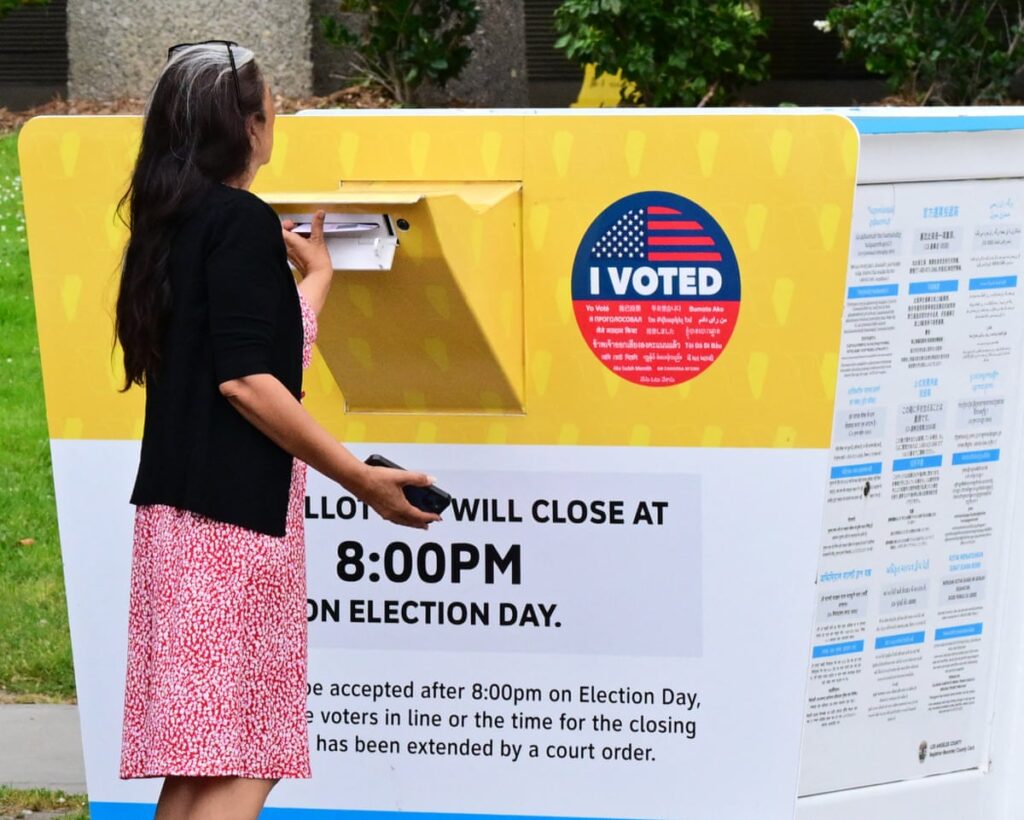
How Institutional Trust Shapes the LA Mayor Election Results
To understand why the act of voting has become so deeply tied to algorithmic tracking during the la mayor election, we must analyze it through Max Weber’s classic frameworks of bureaucracy and institutional trust. Weber argued that modern states maintain dominance through legal-rational authority—a system built on predictable, transparent, and rule-bound procedures.
However, in the digital age, a paradox emerges. The explosion of real-time search queries for local returns indicates that traditional legal-rational authority is facing a crisis of confidence. The modern citizen no longer trusts the bureaucratic “black box” of the state to process their civic input silently.
Instead, the introduction of digital ballot tracking functions as an administrative patch to heal this systemic anxiety. Trust is no longer placed in the human institution or the election official; it is transferred entirely onto the cold, objective transparency of the algorithm.
The ‘Amazon Prime’ Conditioning Behind California Primary Election Results
This transition to data-driven voting creates a profound behavioral connection with our daily commercial habits, reshaping how we perceive the california primary election results. In hyper-urban spaces, platforms like Amazon, Uber, and instant delivery services have conditioned the human psyche to operate within a loop of instant gratification and constant tracking updates (“Your order has been packed,” “Your driver is 2 minutes away“).
When the state introduces features like digital ballot tracking, it directly exploits this exact consumer conditioning. Through the lens of commodity fetishism, the democratic vote is stripped of its abstract civic value and re-conceptualized as a tangible “package” that needs to be monitored from fulfillment to final delivery.
What was built to give the citizen a sense of control over the state inadvertently creates a perfect feedback loop where the digital apparatus monitors the voter’s civic anxiety. The citizen believes they are watching the system, but the system is actually measuring the depth of their screen-refreshing habits.
Surveillance Capitalism and the Real-Time ‘Track My Ballot’ Phenomenon
This datafication of democracy aligns perfectly with Shoshana Zuboff’s theory of Surveillance Capitalism. Zuboff warns that modern digital architectures claim human experience as free raw material for translation into behavioral data. In the context of the la mayor election, the “Track My Ballot” feature functions as a prime instrument of this architecture. By opting into real-time notifications, citizens willingly turn their democratic participation into traceable digital footprints.
Furthermore, we can view this digital engagement through Erving Goffman’s sociological framework of Impression Management. Goffman argued that individuals constantly perform specific roles on a “front stage” to shape public perception. In a hyper-connected environment, a digital screenshot of a verified “track my ballot california” notification or an online “I Voted” sticker functions as vital cultural currency.
Voters display their tracking status on social media not just to ensure their vote mattered, but to perform their civic compliance and progressive identity on the digital stage. The election ceases to be just a mechanism to select local leadership; it becomes a sophisticated tool used by individuals for algorithmic self-validation. This shift toward individual autonomy and shifting societal expectations reflects a broader cultural evolution in how modern generations define responsibility, much like the structural trends driving the global Childfree by Choice Movement.
Pingback: Disney vs FCC – Regulatory Battle | Perspective -