In 2020, when the world went into sudden global lockdowns, a tiny indie game from 2018 achieved the impossible. It didn’t just become popular; it became our collective psychological coping mechanism. It was Among Us. Fast forward to today, and the search charts are exploding once again.
The sudden spike in organic interest isn’t because of a game update. It’s because Paramount+ unexpectedly dropped all episodes of the animated adaptation. But as a sociologist looking at this media frenzy, we have to ask the deeper question: How did a game rooted in deep, structural paranoia and institutional distrust get repackaged into a mainstream corporate streaming asset?
Among Us TV Show: From Pandemic Panic to Primetime Streaming
When Paramount+ announced the Among Us animated series helmed by show creator Owen Dennis, internet traffic went vertical. The show transitions the abstract, faceless crewmates into a fully voiced narrative, adapting the exact aesthetic of the game we spent hundreds of lockdown hours playing. (Wikipedia)
Sociologist Zygmunt Bauman frequently wrote about “Liquid Modernity“—a state where institutions change faster than humans can adapt, leaving us in a permanent state of uncertainty and fear. The original game captured this perfectly. You are trapped in an enclosed, failing infrastructure (a spaceship), forced to complete mundane bureaucratic tasks (wires, downloads), while knowing someone in your immediate circle is actively trying to murder you. It was the perfect metaphor for navigating a global health crisis in an era of hyper-individualism.
By turning this collective cultural trauma into a sleek, consumable animated series, Hollywood is executing what cultural theorist Mark Fisher called Capitalist Realism: the ability of capitalism to absorb its own subversion, strip it of its radical anxiety, and sell it back to us as a Friday night watch party.
Among Us Show Cast: The Star-Studded Mechanics of Corporate Validation
Yvette Nicole Brown and Randall Park Lead the New Crew
A media property is only as viable as its cultural capital. Pierre Bourdieu argued that institutional recognition requires the accumulation of “symbolic capital.” By securing an elite Among Us show cast featuring comedic powerhouses like Yvette Nicole Brown and Randall Park, the project instantly moves from a “video game adaptation” to a premium prestige project.
The casting choices are deeply strategic. Randall Park and Yvette Nicole Brown bring an established, comforting, sitcom-esque familiarity to a universe that is inherently grim and transactional. Their presence softens the edges of a narrative built entirely on betrayal. It transforms the structural horror of the “Impostor” mechanic into digestible, witty network banter.
Among Us Online: Tracking the Digital Resurgence of a Micro-Community
Among Us Download PC vs Among Us Mobile: The Accessibility Economy
The immediate consequence of the TV show drop is a massive secondary wave of consumer intent: people want to play the game again. Search autocomplete algorithms are flooded with queries like among us online, among us download, and among us download pc.
This highlights a fascinating split-level digital consumption:
- Among Us Free on Mobile: The ultimate low-barrier-to-entry model. It democratizes access, turning the smartphone into a portal for rapid micro-interactions.
- Among Us PC / Steam / 3D Mod: The spaces where the hardcore community resides, seeking higher fidelity or modified socio-spatial dynamics (the “mods”).
From a network society perspective, Among Us operates as what sociologists call a “Third Place”—a digital social surroundings separate from the two primary environments of home and work. When traditional third places collapsed, Among Us stepped in. The resurgence of search traffic indicates that audiences don’t just want to watch the show passively; they want to step back into the digital room to perform the ritualistic social interaction themselves. For a deeper look into how the game’s mechanics shaped its unique player culture, check out Jack Benci’s brilliant video essay, Control: An Among Us Video Essay. Also Read: Why Is Minecraft Down Right Now? The Fragility of Our Digital Third Places
Among Us OK for My Child? The Paradox of Sanitized Paranoia
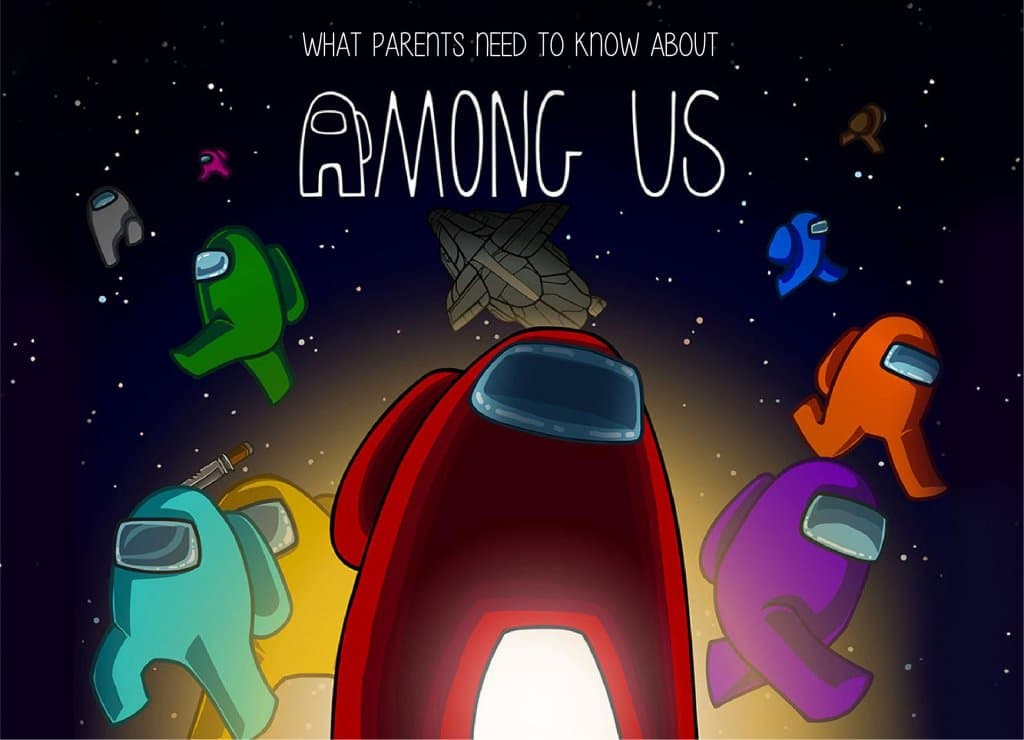
It’s an incredible sociological paradox. Parents are looking at a cartoon adaptation of a game where the literal core mechanic is cold-blooded murder, lying, and psychological manipulation, and wondering if it’s safe for a 9-year-old.
The reason this question even exists is due to visual styling. By using bright, rounded, minimalist, and adorable character designs (the bean-shaped crewmates), the game sanitized its existential dread. It made institutional paranoia cute.
Erving Goffman’s Frame Analysis explains this perfectly: by changing the visual “frame” of an activity, you completely alter its social meaning. Wrap structural violence and deceit in neon colors, and it shifts from a psychological horror landscape into wholesome family-friendly intellectual property.
Among Us 2 Confirmed? The Infinite Loop of the IP Franchise
With millions of users digging for rumors around among us 2 confirmed? We witness the ultimate trajectory of modern digital capitalism. InnerSloth originally cancelled a planned sequel years ago to focus on optimizing the baseline platform. Yet, the consumer public—trained by the relentless machinery of Hollywood and the gaming industry—demands linear, infinite expansion.
Capitalism cannot allow a cultural phenomenon to simply exist as a complete, finite moment in history. It must be franchised, serialized, adapted, and extended. Whether a literal sequel drops or the streaming show gets renewed for Season 2, the machinery ensures that the loop of consumption never truly closes.
The Takeaway
When you sit down to stream the new animated episodes on Paramount+, you aren’t just watching a fun adaptation of a viral game. You are watching a masterclass in how modern cultural industries capture authentic, chaotic internet lightning, run it through a corporate filter, smooth out the radical anxieties, and deliver it back to us wrapped in premium voice acting and high-end marketing.
The show leaves us with one final, ironic meta-question: In this giant ecosystem of streaming content, user data tracking, and relentless monetization… who is the real Impostor in the room?
What do you think?
Does the animated show capture the chaotic energy of the original lockdown days, or has the corporate rebrand stripped away what made it special? Let me know your thoughts in the comments below!