Some voices are so necessary that the world feels quieter without them .Marjane Satrapi — French-Iranian author, filmmaker, and human rights advocate — died on June 4, 2026, at the age of 56. She leaves behind not just books and films, but a blueprint for how art can resist power, preserve identity, and tell truths that governments try to bury. This is not an obituary. It’s an attempt to understand why her work mattered sociologically — and why it always will.
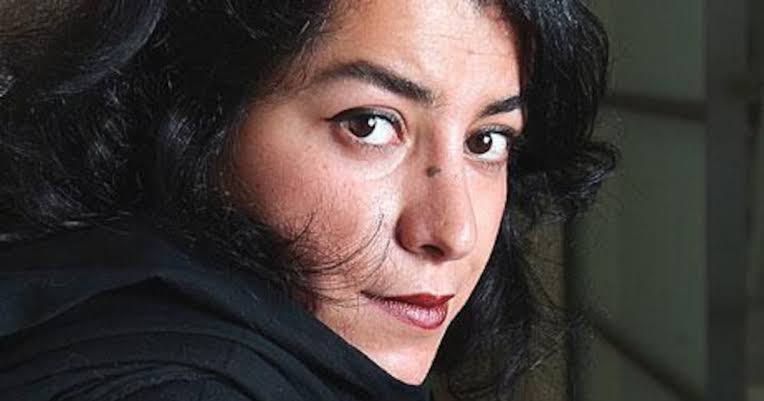
Who Was Marjane Satrapi?
Born in Rasht, Iran on November 22, 1969, Satrapi came of age during one of the most turbulent periods in Iranian modern history. The Islamic Revolution of 1979 transformed Iranian society and imposed new political and social restrictions that deeply influenced her childhood.
As conditions became increasingly difficult, her parents sent her to Europe — beginning a journey that would shape both her identity and her literary career. She moved to France in 1994 and became a French citizen in 2006. But she never stopped being Iranian. That tension — between where you’re from and where you live — became the engine of everything she created.
What Was Marjane Satrapi’s Cause of Death?
“Marjane Satrapi died of grief just over a year after the death of Mattias Ripa, her husband and the love of her life,” stated a press release from her loved ones. Producer, actor and screenwriter Mattias Ripa had died on April 8, 2025. (Euronews) She survived a revolution. She survived exile. She survived decades of being an outsider in every country she called home. In the end, it was love — its absence — that she could not outlive.
Why Was Persepolis Controversial?
Persepolis was banned in Iran almost immediately. But it was also challenged and removed from school curriculums across the United States — a fact that reveals something deeply uncomfortable about how societies handle inconvenient truths. The book showed the Iranian Revolution from the inside — not as a geopolitical event, but as something that happened to a little girl’s family, friendships, and sense of self. It humanized a people that Western media had spent decades dehumanizing.
Sociologist Edward Said’s concept of Orientalism is essential here. Said argued that the West constructs the “East” as exotic, dangerous, and other — to justify its own political dominance. Persepolis directly dismantled that construction. It said: we are not your stereotype. We are people. That is why it threatened people in power — both in Iran and in the West.
The book was also controversial for its honest portrayal of political violence, religious hypocrisy, and teenage rebellion under authoritarian rule. It didn’t offer easy answers or comfortable heroes. Just truth.
Is Persepolis LGBTQ?
This question searches frequently — and the honest answer is nuanced. Persepolis itself doesn’t center LGBTQ themes, but Satrapi’s broader body of work and public persona were consistently aligned with queer-inclusive, feminist, and anti-authoritarian values.
More importantly, the question points to something sociologically significant: marginalized communities often find deep resonance in stories of people forced to hide who they are, navigate dual identities, and resist state-imposed definitions of “acceptable” personhood. Persepolis speaks to that experience even when it doesn’t name it directly.
The Sociology of Exile: Who Gets to Belong?
Satrapi’s life was a living case study in what sociologists call “third culture identity” — the experience of people raised between cultures who fully belong to neither. She was too Western for Iran. Too Iranian for France. Too political for comfortable literary circles. Too artistic for political activists.
This in-between space is where her most powerful work was created. Sociologist Stuart Hall wrote about cultural identity as something that is never fixed — always in process, always being made and remade. Satrapi’s entire career was that process made visible.
Marjane Satrapi and the Women, Life, Freedom Movement
Her final comic was “Woman, Life, Freedom” in 2024. Two years prior to its publication, she had voiced support for the Mahsa Amini protests, stating that the Women, Life, Freedom movement was a cultural revolution. She understood — as a sociologist would — that what was happening in Iran’s streets was not just political protest.
It was a generation refusing to inherit their parents’ silence. It was women saying: our bodies are not the state’s territory. She had written that story decades earlier in Persepolis. She lived to see it play out in real life. And she spent her final years making sure the world paid attention.
Why Marjane Satrapi Work Is More Relevant Than Ever
In an era of rising authoritarianism globally — where books are being banned, minorities are being erased from curricula, and women’s rights are being rolled back — Persepolis is not a historical document. It’s a warning. Every society that bans a book is afraid of the same thing: that ordinary people will recognize themselves in the story, and realize they have more power than they’ve been told. Satrapi knew this. She spent her life proving it.
Final Thought
“Her passing marks the loss of a leading figure in French culture and a freedom-loving artist whose work carried a universal message,” said French President Emmanuel Macron. But her work doesn’t grieve with her. It stays. It circulates. It gets assigned in classrooms, challenged by school boards, defended by students who feel seen for the first time.
That is the sociological function of art at its most powerful — not to decorate walls, but to build bridges between experiences that power tries to keep separate. Marjane Satrapi built those bridges her entire life. They will outlast all of us.