Picture this. You’re 18 years old. A billion-dollar company flies you to a new city, puts your face on merchandise, sells tickets to watch you perform — and pays you nothing. Sounds illegal, right? Welcome to American college sports.
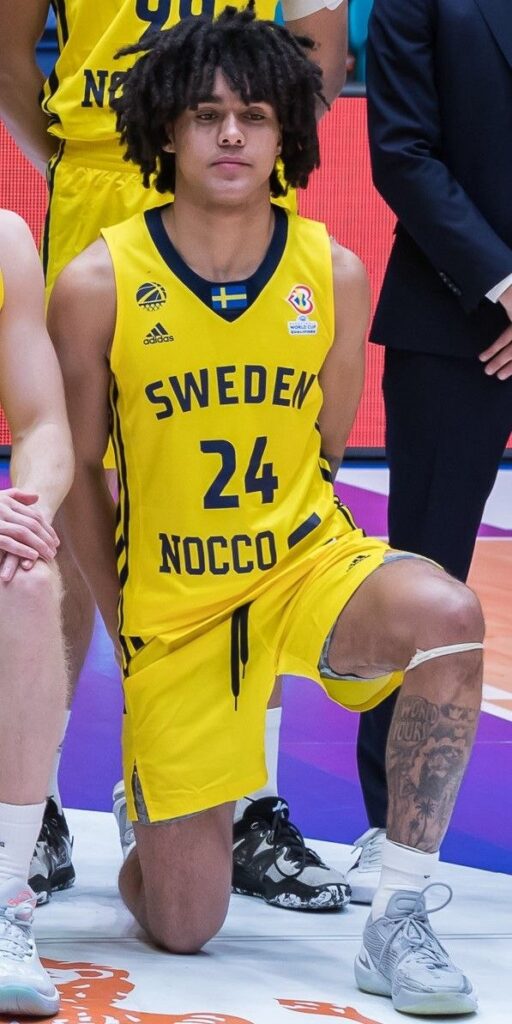
Meet Elliot Cadeau — The Kid Who Refused to Play Along
Elliot Cadeau is 21. Born in Brooklyn, raised in New Jersey, Haitian father, Swedish mother. By any measure, a prodigy. Elliot’s journey is a classic example of how global talent flows—much like the patterns I explored in my post about Migration from the US to Canada.
- At UNC, he ranked #1 in the ACC for assists — leading a top-25 national offense against elite competition. (Sports Business Classroom)
- He reclassified early, graduating high school ahead of schedule just to get to college basketball faster. (Wikipedia)
- He’s currently at Michigan, trending nationally — and the NBA is watching.
But here’s what nobody’s talking about:While Elliot was running plays and filling arenas, the institution profiting most from his labor wasn’t planning to share much of it with him.
The Numbers That Should Make You Angry
Let’s talk money — because this is where it gets uncomfortable.A joint study by the National College Players Association and Drexel University found that FBS basketball players had an average fair market value of $289,000 per year — while receiving scholarships worth a fraction of that. (Ncpanow)
Meanwhile:
- Over four years, basketball players at top conferences had an estimated fair market value of $1 million to $2.7 million. (Ncpanow)
- Coaches collected multi-million dollar salaries. ADs collected multi-million dollar salaries. The NCAA collected billions.
- The players? A dorm room and a meal plan.
One athlete put it plainly: “The NCAA is using athletes to create a multibillion dollar industry that pays everyone but the players.” (Ncpanow)
That’s not a hot take. That’s a quote from a college student describing his own reality.
Sociology Has a Name for This: Exploitation
Karl Marx talked about surplus value — the gap between what a worker produces and what they actually receive. He was writing about factory workers in 1867. He could have been writing about March Madness in 2026.The NCAA built its empire on a concept called amateurism — the idea that college athletes play for the love of the game, not money, and therefore don’t deserve to be paid like professionals.
But here’s the thing about amateurism:
- It was invented by 19th century British aristocrats to keep working-class athletes out of competition
- It was never about purity — it was always about who gets to control the money
- Scholars now describe the NCAA’s amateurism as “a collusive, exploitative, and racialized pay-for-play scheme” that has disproportionately harmed Black athletes for decades. (University of Michigan Athletics)
The Race Angle Nobody Wants to Say Out Loud
Here’s where it gets even more sociologically loaded.Black athletes are disproportionately represented on revenue-generating teams — yet they graduate at lower rates than their white peers and have historically faced disparate treatment both on the field and in the classroom. (Texas Law Review)
Think about what that actually means:
- The athletes generating the most money are disproportionately Black
- The coaches, administrators, and executives keeping that money are disproportionately white
- The system is defended as “education-first” — while graduation rates for these same athletes remain troublingly low
Researchers called it exactly what it is: a transfer of wealth — from predominantly Black basketball and football players to predominantly white coaches, ADs, and commissioners. (Ncpanow)
Sociologist C. Wright Mills said the most dangerous lies are structural ones — the kind baked so deep into institutions that they stop looking like lies at all. The NCAA called it amateurism. Mills would have called it something else entirely.
So What Changed? The $2.8 Billion Reckoning
The system finally cracked — in court.In June 2025, a landmark settlement was approved, requiring the NCAA to pay $2.8 billion in back damages to former athletes and establishing a new revenue-sharing model for college sports. (Front Office Sports)For the first time in history, schools can now directly pay athletes.
But before you cheer — read the fine print:
- The yearly pool cap starts at $20.5 million per school — shared across all athletes in all sports. (Shook, Hardy & Bacon)
- The average payout for a basketball player? Around $135,000 over ten years.
- Meanwhile, top college coaches still make $5–10 million per year.
NIL deals help — Elliot Cadeau himself signed an international endorsement deal in high school, becoming the first American high school athlete to sign an NIL deal abroad. (Wikipedia) He has a clothing line. Brand partnerships. He figured out how to work the system. But most college athletes don’t have that leverage. Most never will.
Tracking Elliot Cadeau’s NIL Net Worth and Earnings
While evaluating structural exploitation in college sports, high-profile athletes like UNC’s point guard bring the financial scale into perspective. Rumors and searches surrounding Elliot Cadeau’s NIL worth or his specific NIL deal worth highlight a broader capitalist trend. While exact corporate Elliot Cadeau NIL earnings remain tightly guarded behind non-disclosure agreements, the estimates reflect how elite player valuation functions as a distraction from the lack of revenue sharing for lower-tier athletes.
The Real Question Behind the Highlight Reel
When you watch March Madness — and 40 million Americans do — you’re watching something extraordinary.You’re watching 18 to 22 year olds perform at peak athletic ability, generate television deals worth hundreds of millions, fill 70,000-seat arenas, and make their universities globally famous.And you’re watching a system that spent decades telling those same kids that wanting to be paid was somehow unsportsmanlike.
Elliot Cadeau transferred schools, built his brand, and is headed to the NBA Draft. He navigated the system smartly.But what about the kid who blew out his knee in sophomore year?The one who spent four years building someone else’s empire, graduated with a degree in a field he never chose, and has zero professional prospects?That kid doesn’t trend on Google.
The Takeaway
The NCAA didn’t accidentally build a system that extracted billions from young, predominantly Black athletes while calling it education.It built that system on purpose — and defended it legally, politically, and rhetorically for over a century. The $2.8 billion settlement is a start. NIL is a crack in the wall.
But Erving Goffman would remind us: institutions don’t give up power — they rebrand it.
The real change won’t come from a settlement.It’ll come when enough people watch March Madness and ask:
Who’s really winning here?
Pingback: What You Are Reading About War: A Real Story Or A Script -