Two headlines. Same day. Same war.
NYT: “9 Killed in Israeli City After Iranian Missile Strike”NYT (same day, about Iran): “Iran says dozens are killed in strike on school”
Notice anything? One names the attacker. One doesn’t.One uses active voice. One doesn’t.One gives you grief. One gives you doubt.This isn’t an accident. This is how narrative warfare works — and most of us are consuming it without realizing it.
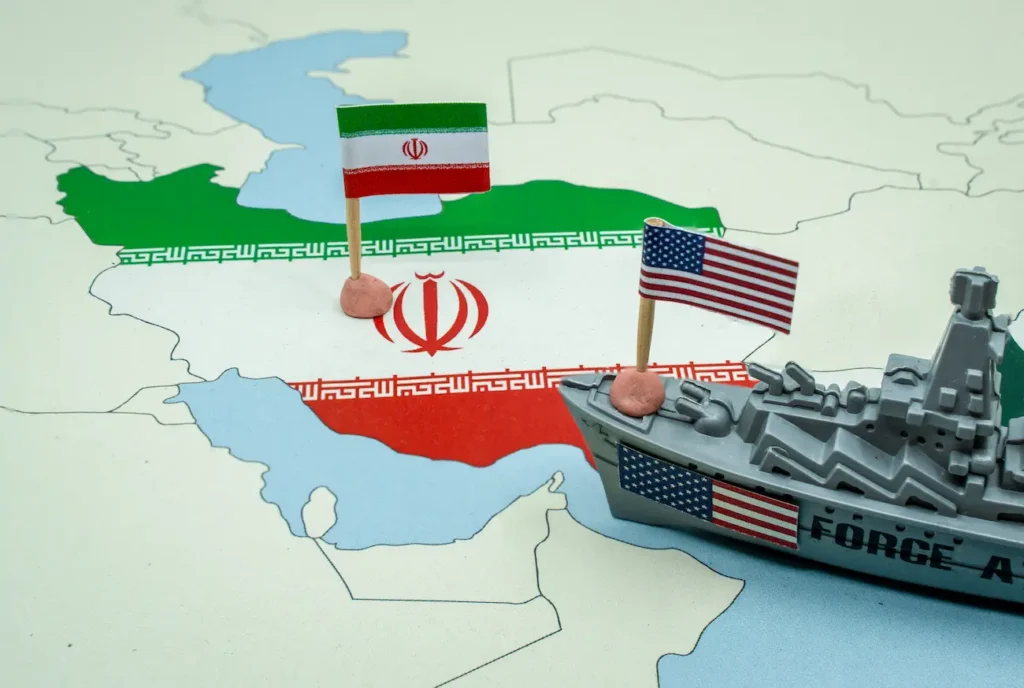
What’s Actually Happening Right Now
Let’s start with facts, because the framing begins the moment you read a headline.On February 28, 2026, the United States and Israel launched strikes across Iran, assassinating Supreme Leader Ali Khamenei and dozens of other officials — while also killing approximately 170 civilians, many of them schoolgirls, when a missile hit a school adjacent to a naval base. (Wikipedia)
Thirty-nine days later, US and Israeli attacks continue — with universities, oil facilities, airports, and residential areas among the targets. Iran has responded with missile and drone strikes across the Gulf. (Al Jazeera)
Iran has now accepted a two-week ceasefire. Trump has suspended US attacks for two weeks, subject to Iran agreeing to terms. (Encyclopedia Britannica)This is a live war. People are dying. Cities are being bombed.And the story most Americans are being told? Barely resembles that.
The Language of Who Matters
Western media coverage of this conflict has repeatedly used selective language — framing US and Israeli strikes as “self-defence” while depicting Iranian actions as “provocation.” This linguistic shift normalizes civilian casualties and manufactures public consent for military action. (Al Jazeera Institute)
Here’s what that looks like in practice:
- US/Israel strikes → “targeted,” “pre-emptive,” “defensive operations”
- Iran’s response → “escalation,” “provocation,” “threat to regional security”
- Iranian civilian deaths → “Iran says…” (implying doubt)
- Israeli civilian deaths → Named, counted, mourned
When the US attack on Minab killed at least 175 people — mostly schoolgirls — major Western outlets mentioned it briefly, often attributing the information to “Iranian state media,” implicitly questioning its credibility. If a similar incident had occurred in Israel, the coverage would have dominated front pages for days. (Tehran Times)
Same tragedy. Completely different treatment.
Sociology Has Been Warning Us About This for 50 Years
In 1978, Edward Said published Orientalism — one of the most important books in the sociology of knowledge.
His argument was simple and devastating: the West didn’t just colonize land. It colonized how the Middle East was imagined. Through centuries of literature, journalism, and political speech, “the Orient” was constructed as irrational, volatile, dangerous, and fundamentally different from a rational, orderly West. This wasn’t description — it was a power structure.
Said noted that in almost all Western media, “the Arab is always shown in large numbers,” with depictions representing “mass rage and misery, or irrational gestures.” These depictions reached a peak during Iraq, when the nation was falsely portrayed as holding weapons of mass destruction — propelling the US into a catastrophic war based on a lie. (The Daily Campus)
Twenty years later. Same playbook. Different country.
Today’s coverage of Iran draws directly from that Orientalist tradition — Ayatollahs cast as medieval figures, Iran portrayed as a kind of modern Mordor, with the real complexity of 80 million people’s lives completely erased. (Medium)
Manufacturing Consent — Noam Chomsky Saw This Coming
In 1988, Noam Chomsky and Edward Herman published Manufacturing Consent — a detailed breakdown of how mainstream media doesn’t report the news so much as manage what the public is allowed to think about it.
Their core argument: media isn’t neutral. It reflects the interests of the institutions that fund it, the governments it depends on for access, and the ideological framework it was built inside.After the February 28 strikes, Trump delivered a televised address framing the attacks as necessary and defensive. Within hours, major Western media outlets were echoing the same language — “pre-emptive strike,” “Iranian nuclear threat,” “regime change.” The political speech became the news frame. (Al Jazeera Institute)
This is textbook manufactured consent — when the government sets the vocabulary and the media repeats it.Media analysis of the current coverage found a sharp divide: left-leaning outlets framed the war as a “failing, leaderless quagmire,” while right-leaning outlets called it a “decisive military campaign on the verge of a knockout blow.”
Two completely different realities. Both reading from the same set of facts.
What You’re Not Being Told
Here’s what gets buried when the framing machine runs at full speed:
- Iran was experiencing its largest protests since the 1979 revolution — millions in the streets, demanding change — before the strikes began. The Iranian government massacred thousands of protesters in January 2026. (Wikipedia)
- The Iranian people are not their government. Never were.
- Many Iranians inside the country have expressed concern that the US-Israeli military action will not lead to democracy — but their voices receive almost no airtime in Western coverage. (Honi Soit)
- Diplomatic talks in February 2026 showed significant progress — Iran was reportedly willing to make concessions on its nuclear programme — but Trump said he was “not thrilled” with the talks. War followed within days. (House of Commons Library)
Diplomacy almost worked. Nobody led with that.
Why This Matters Beyond the Middle East
You might be reading this from the US, wondering why a sociologist is writing about a war.Here’s why: how a war is framed determines whether it happens at all.
The Iraq War happened partly because enough Americans believed the WMD story. The language worked. The framing held. And by the time the truth emerged, hundreds of thousands were dead.Sociologist Stuart Hall called this “encoding/decoding” — the idea that media messages are encoded with particular ideological assumptions, and most of us decode them without questioning the frame.
The frame right now says: Iran is the threat. The strikes are necessary. The civilian deaths are regrettable but not really the story.But if you flip the frame — if you ask who benefits, who is counting whose dead, whose children’s names we know and whose we don’t — a completely different picture emerges.
The Takeaway
You don’t have to take a side in a geopolitical conflict to notice that the language used to describe it isn’t neutral.You don’t have to support any government — Iranian, American, or Israeli — to ask: why does one dead child make the front page and another gets attributed to “Iranian state media”?
Edward Said asked that question in 1978. We’re still waiting for an answer.The next time you read a headline about Iran — read it again. Slower. Ask who wrote it, who funded the outlet, and whose grief they chose to name.
That’s not cynicism.That’s media literacy. And right now, it might be the most important skill you have.
This isn’t the first time we’ve seen structural lies shape a narrative. Whether it’s the geopolitics of war or the exploitation in college sports, the patterns remain the same. To see how this applies to the world of athletics, read my analysis at CuriousClarity.
Pingback: Melania Trump, Epstein, and the Woman Nobody Is Actually Seeing -